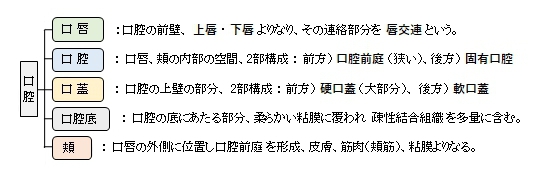
・「口腔底とは舌と歯肉(歯ぐき)の間のくぼんでいる部分をさします。 」(日本頭頚部外科学会 )

 この部位の閲覧には会員登録が必要です。
【口腔底を構成する筋】
AIの「COPILOT」によると口腔底を構成する筋は以下の4つになる。
1. 顎舌骨筋 2. オトガイ舌骨筋 3. 顎二腹筋 4. 茎突舌骨筋
また、「sciencedirect.com」では以下の3つを構成する筋としている。
1. 顎舌骨筋 2. オトガイ舌筋 3.オトガイ舌骨筋
 この部位の閲覧には会員登録が必要です。
以下は「sciencedirect.com」の解説文となる。
The floor of mouth is bounded anteriorly and laterally by the lower gingiva, medially by the oral tongue, and posteriorly at the insertion of the anterior tonsillar pillar into the oral tongue. The mylohyoid, genioglossus, and geniohyoid muscles comprise the muscular floor of the oral cavity. This region is divided into right and left halves by the lingual frenulum and contains the ostia of the submandibular and sublingual salivary glands.
The sublingual glands lie immediately beneath the floor of mouth mucosa and are separated by the genioglossus and geniohyoid muscles. The submandibular glands lie on the external surface of the mylohyoid muscle near its insertion to the mandible and terminate at Wharton’s (submandibular) ducts, which are approximately 5 cm long and course between the sublingual gland and genioglossus muscle before exiting near the anterior floor of mouth at midline bilaterally. Motor innervation is provided by the hypoglossal nerves, whereas sensory innervation is provided by the lingual nerve. The first echelon draining lymphatics are the submandibular and subdigastric nodes. Lymphatic spread to the submental nodes is rare. The second echelon draining lymphatics are the middle and lower anterior cervical nodes.
【語句】
・gingiva:歯肉 ・tonsillar pillar:扁桃柱 ・mylohyoid muscle:顎舌骨筋 ・gnioglossus muscle:オトガイ舌筋 ・geniohyoid muscle:オトガイ舌骨筋 ・comprise:構成する ・lingual frenulum:舌小帯 ・ostia:小孔 ・submandibular gland:顎下腺 ・sublingual gland:舌下腺